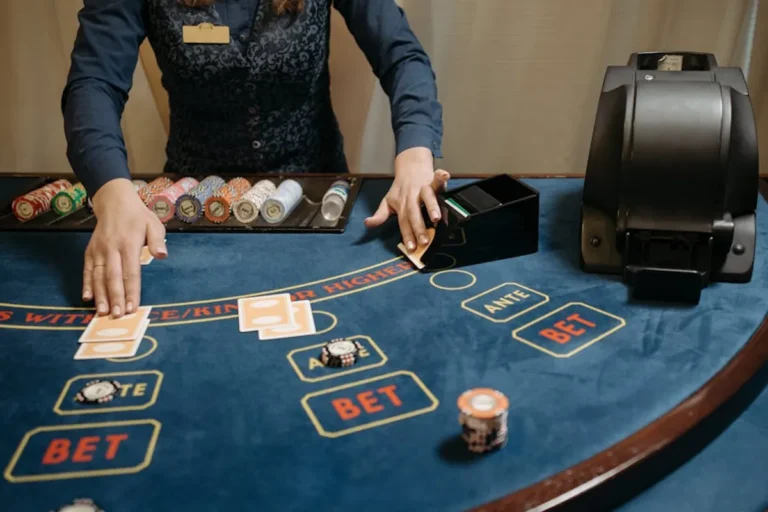
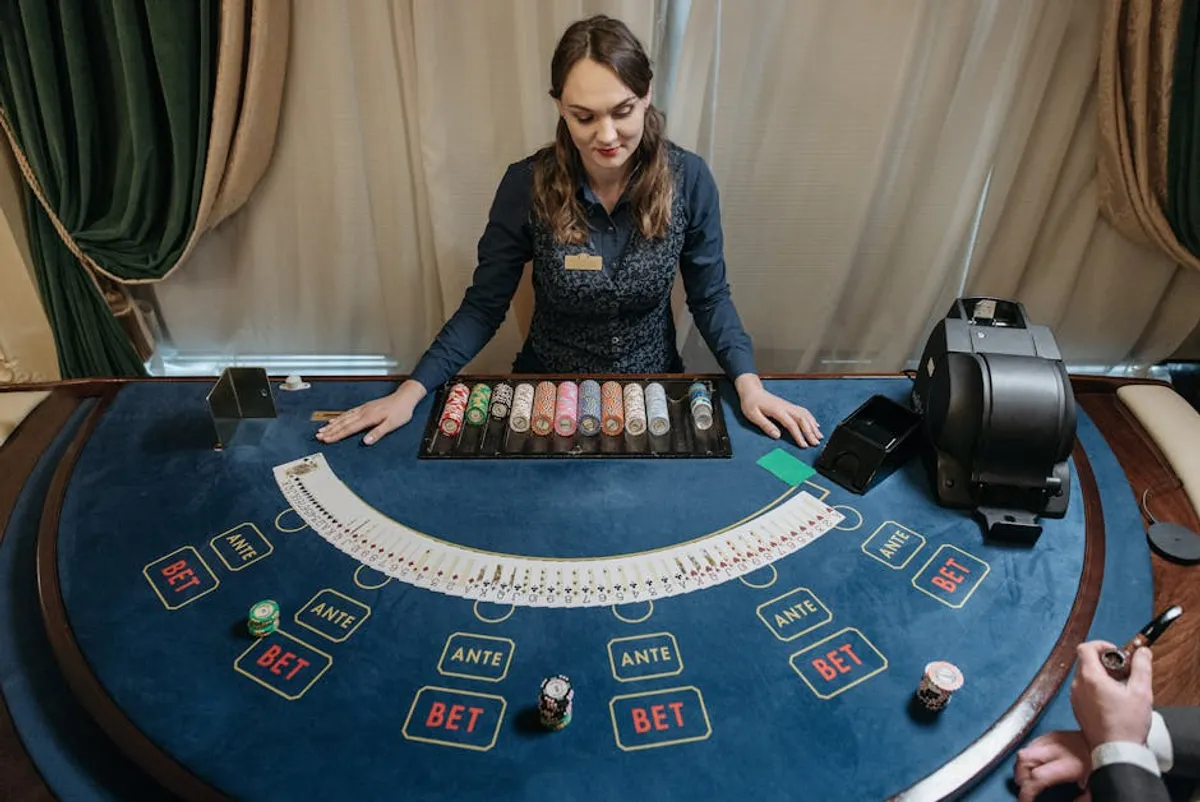
Entering the world of casino table games can feel overwhelming with the array of options available. For beginners, Blackjack, Roulette, and Baccarat represent distinct entry points, each offering a unique blend of strategy, chance, and pace. Understanding their core mechanics, house advantages, and player decisions is crucial for choosing a game that aligns with your interest and learning style, providing a foundation for informed play.
Blackjack: The Card Game of Strategy
Blackjack, also known as Twenty-One, is a card game played against a dealer. Its popularity stems from its blend of luck and strategic decision-making, where player choices directly influence the outcome.
Objective of Blackjack
The primary goal in Blackjack is to achieve a hand total closer to 21 than the dealer's hand, without exceeding 21. If your hand goes over 21, it's called a "bust," and you lose automatically. The dealer also aims for 21 but must follow specific rules for hitting or standing.
Basic Blackjack Rules
- Card Values: Number cards (2-10) are worth their face value. Face cards (Jack, Queen, King) are worth 10. Aces can be worth 1 or 11, depending on which value benefits the hand most without busting.
- Gameplay Flow: Players receive two cards face up. The dealer receives one card face up and one face down (the "hole card"). Players then decide whether to "Hit" (take another card), "Stand" (keep their current hand), "Double Down" (double their bet and take one more card), or "Split" (separate two cards of the same rank into two new hands).
- Dealer's Turn: After all players have acted, the dealer reveals their hole card. The dealer must hit until their hand totals 17 or more, and must stand on all 17s (some tables specify "hit soft 17," where a hand with an Ace counting as 11 and other cards totaling 6 must be hit).
- Winning: You win if your hand is higher than the dealer's without busting, or if the dealer busts and you haven't. A "Blackjack" (an Ace and a 10-value card on the initial two cards) typically pays 3:2, while other wins pay 1:1.
Pro Tip: Always assume the dealer's face-down card is a 10. This mental shortcut helps in making strategic decisions, particularly when deciding whether to hit or stand based on the dealer's visible card.
Roulette: The Game of Chance
Roulette is a game of pure chance, offering a wide range of betting options on where a small ball will land on a spinning wheel. It requires no skill or strategy beyond understanding the various bets.
Objective of Roulette
The objective is to correctly predict the number or type of pocket (color, odd/even, high/low) the ball will land in after the wheel spins. Payouts vary based on the probability of the chosen bet.
Understanding the Roulette Wheel and Table
- Wheel Layout: European roulette wheels have 37 pockets (numbers 1-36 and a single zero '0'). American roulette wheels have 38 pockets (1-36, a single zero '0', and a double zero '00'). The presence of the double zero increases the house edge.
- Table Layout: The betting layout mirrors the wheel's numbers and various categories for placing chips.
Common Roulette Bets
Roulette bets are broadly categorized into "inside bets" (placed on specific numbers or small groups of numbers) and "outside bets" (placed on larger categories).
- Inside Bets:
- Straight Up: A single number (pays 35:1).
- Split: Two adjacent numbers (pays 17:1).
- Street: Three numbers in a row (pays 11:1).
- Corner: Four numbers that meet at a corner (pays 8:1).
- Six Line: Six numbers in two adjacent rows (pays 5:1).
- Outside Bets:
- Red/Black: Bet on the color (pays 1:1).
- Odd/Even: Bet on odd or even numbers (pays 1:1).
- High/Low: Bet on 1-18 or 19-36 (pays 1:1).
- Dozens: Bet on the first (1-12), second (13-24), or third (25-36) dozen (pays 2:1).
- Columns: Bet on one of the three vertical columns (pays 2:1).
Baccarat: The Game of Simplicity
Baccarat is a card game renowned for its simplicity, making it highly accessible for beginners. Players essentially bet on one of three outcomes, with minimal decision-making required during play.
Objective of Baccarat
The objective is to bet on which of two hands—the "Player" or the "Banker"—will have a total closest to nine. There is also an option to bet on a "Tie."
Basic Baccarat Rules
- Card Values: Cards 2-9 are worth their face value. 10s, Jacks, Queens, and Kings are worth zero. Aces are worth one. Hand totals are calculated by summing the card values; if the sum is a two-digit number, only the second digit counts (e.g., 7+8=15 becomes 5).
- Gameplay Flow: Two hands are dealt: one for the Player and one for the Banker. Each hand initially receives two cards. Players place their bets before cards are dealt, choosing Player, Banker, or Tie.
- Third Card Rule: Depending on the initial totals, a third card may be dealt to either the Player, Banker, or both, following a strict set of predefined rules. Players do not make decisions on whether to draw a third card; the dealer handles this automatically.
- Winning: The hand closest to nine wins. Winning Player bets typically pay 1:1. Winning Banker bets also pay 1:1 but usually incur a 5% commission due to the Banker's slight statistical advantage. Tie bets typically pay 8:1 or 9:1 but have a significantly higher house edge.
Best for: Players seeking a fast-paced game with straightforward rules and minimal strategic input.
Choosing Your Starting Point
When approaching casino table games as a beginner, consider your preference for strategy versus pure chance. Blackjack offers the most player agency, where learning basic strategy can reduce the house edge significantly. Roulette provides a high-energy experience with diverse betting options but relies entirely on luck. Baccarat is the simplest, ideal for those who prefer a relaxing game with clear outcomes and minimal interaction. Each game presents a unique entry point into the casino experience; understanding their fundamentals allows you to select one that best suits your comfort level and entertainment goals.
Frequently Asked Questions
What is the house edge?
The house edge is the casino's built-in advantage, expressed as a percentage of the player's initial bet. It represents the average gross profit the casino expects to make from each bet over the long term.
Which game has the best odds for players?
Blackjack typically offers the best odds for players, especially when using basic strategy, with a house edge often below 1%. Baccarat's Banker bet is also favorable, usually around 1.06%, while Roulette's house edge is higher, particularly in American Roulette (around 5.26%).
Can I practice these games for free?
Many online casinos and gaming websites offer free-play versions of Blackjack, Roulette, and Baccarat. This allows beginners to learn the rules, practice betting, and understand game flow without risking real money.
Do I need to be good at math to play?
No, you do not need advanced math skills. Basic arithmetic is sufficient for understanding card values and payouts. For Blackjack, memorizing basic strategy charts is more important than complex calculations.