
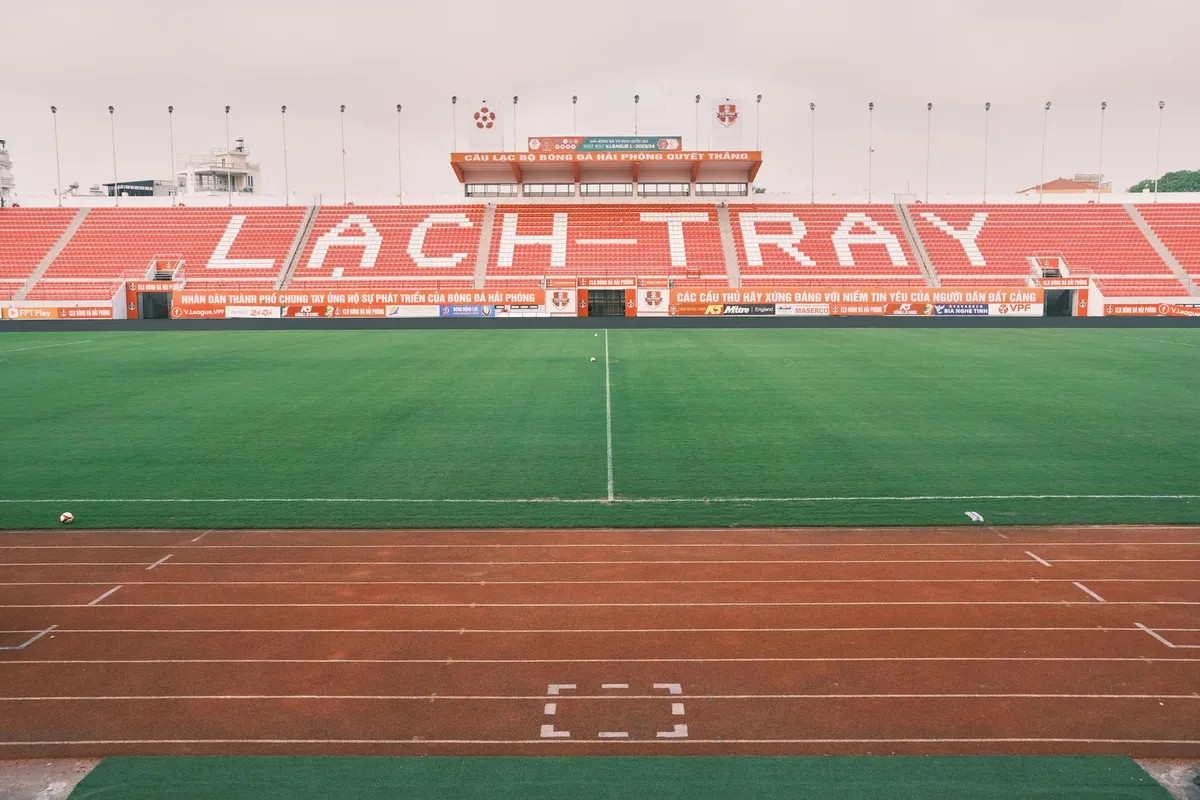
The Vietnam Football Federation talks about specific problems facing the V-League at every public event. Foreign player quotas. Refereeing standards. Sponsorship development. These are real issues but they are not the structural problems that actually hold the league back. The actual structural problems are different and are less likely to be addressed because addressing them requires honest engagement that federation leadership has not been willing to undertake.
This is what I think the actual structural problems are, based on covering the league for fifteen years.
The financing model is built on assumptions that no longer hold
The V-League's financing model assumes that clubs are owned by larger Vietnamese corporations that can absorb football operating losses as marketing expenses. This was approximately how the league developed across the 2000s and 2010s. Clubs operated at losses. Corporate ownership absorbed the losses. The system functioned.
The assumption no longer holds reliably. Several major Vietnamese corporations that historically supported football have reduced their commitment as their commercial circumstances have changed. New corporate ownership has not consistently appeared to replace exiting ownership. The clubs that depend on this financing model are increasingly fragile.
The federation's response to this has been to encourage clubs to develop independent revenue. The encouragement is not unreasonable but is detached from the realities the clubs face. Vietnamese football has a small commercial revenue base. Ticket sales are modest. Television rights are limited. Merchandise is not a meaningful revenue stream for most clubs. The independent revenue that the federation encourages is not actually available at scales that would matter.
The honest engagement would acknowledge that the financing model needs structural change rather than incremental encouragement. The honest engagement has not happened.
The youth development pipeline is concentrated in too few clubs
The V-League has produced specific bright spots in youth development across the past decade. Hoang Anh Gia Lai, Hanoi FC, and a handful of other clubs have developed players who have moved into the senior national team setup successfully. These successes are real and deserve recognition.
The problem is that the youth development capability is concentrated in a small number of clubs. Most V-League clubs do not have meaningful youth development infrastructure. Their senior squads are filled through transfers from the limited pool of clubs that do produce players. The aggregate youth development capacity of the league is much smaller than the number of clubs in the league would suggest.
The implications extend beyond the league itself to the national team. The talent pool available for national team selection depends on the aggregate youth development capacity of the league. The current capacity produces enough talent for occasional regional successes but not enough for sustained competitive performance against the strongest Asian football nations.
The federation's response to this has emphasized national-level academy development. The investment is welcome but cannot substitute for distributed club-level youth development that operates continuously rather than in cohorts. The scale that distributed club development would provide is not currently available.
The competition structure does not reward the right things
The V-League competition structure has remained substantially the same across multiple decades. League play across two halves of the season. Cup competitions that operate alongside league play. Promotion and relegation between V-League 1 and V-League 2.
The structure produces specific outcomes that are not always aligned with developing the league's competitive level. The relegation pressure produces conservative play that limits the developmental opportunities the league could otherwise provide. The cup competitions are scheduled in ways that disadvantage clubs that try to take them seriously. The fixture calendar accommodates national team commitments awkwardly.
Other regional leagues have experimented with structural changes that address these issues differently. The Thai League has restructured several times across the past decade. The J-League has its own approach to balancing competition with developmental priorities. The K-League has yet another approach. The V-League has not engaged seriously with the structural alternatives that other regional leagues have explored.
The federation's commitment to the existing structure is partly cultural and partly inertial. Neither is a strong reason to maintain a structure that other comparable leagues have moved past in pursuit of better outcomes.
The relationship with the broader football economy is underdeveloped
The V-League exists within a regional football economy that includes Thailand, Indonesia, Malaysia, Singapore, and other Southeast Asian leagues, plus the larger East Asian leagues in Japan, South Korea, and China. The V-League's relationship with this broader economy has been underdeveloped relative to the opportunities it could exploit.
Player movement between Vietnamese clubs and other regional clubs has been modest. Coaching exchanges have been limited. Friendly competitions have been ad hoc rather than systematic. The integration with the broader regional football economy has not been pursued at the level that would benefit the V-League.
The federation's posture toward regional integration has been generally cautious. The caution may have been appropriate in earlier periods when the league was establishing itself. It is no longer appropriate in the current period when the league has the opportunity to participate in the broader regional development of Southeast Asian football but is mostly choosing not to.
The governance structure does not produce honest assessment
The deepest structural problem may be the governance structure itself. The federation governance does not produce the honest assessment of the league's situation that would inform better strategic decisions. The federation officials are positioned to defend current arrangements rather than to evaluate them critically.
The pattern is not specific to football or to Vietnam. Sports governance bodies in many contexts produce similar self-defensive posture. The pattern is structural to how these bodies are designed and how their leaders advance through them.
The implication for the V-League is that the structural problems described above are unlikely to be addressed by the federation acting alone. The federation is part of the structure that prevents them from being addressed. Addressing them would require either federation governance reform or external pressure that the federation cannot resist.
Neither path is currently active. The structural problems will likely persist until the consequences become acute enough to force engagement that is currently being avoided.
What honest engagement would look like
For the V-League, honest engagement with these structural problems would involve specific commitments.
Acknowledging publicly that the corporate ownership financing model is no longer reliable and engaging seriously with alternatives.
Investing in distributed youth development across the full club base rather than relying on concentrated capacity at a few clubs.
Examining the competition structure against alternatives that other regional leagues have implemented and being open to changes.
Engaging more actively with the regional football economy through systematic player exchanges, coaching development, and competition arrangements.
Reforming federation governance to produce more honest assessment of the league's situation.
None of these is novel. All have been suggested by various observers across the years. None have been pursued seriously. The cumulative effect of not pursuing them is the V-League's continued struggle to develop into the competition it could be.
What I think happens next
I do not expect the federation to engage seriously with these structural problems in the near term. The institutional incentives all push against the engagement. The pattern of past behavior suggests continued avoidance.
I do expect the costs of continued avoidance to accumulate. Clubs will continue to face financial pressure. Youth development will continue to underperform regional alternatives. The competition will continue to underdeliver on its potential. The national team will continue to overperform relative to the league's developmental capacity but will hit ceilings that the underdeveloped league cannot raise.
At some point the cumulative costs may become acute enough to force the structural engagement that is currently being avoided. The form that engagement takes when it eventually arrives will depend on the conditions at that point. Earlier engagement would produce better outcomes than later engagement, but earlier engagement is not on the federation's current trajectory.
This is the honest assessment. It is not the assessment that gets repeated in mainstream Vietnamese football coverage. It is what I think is actually true based on watching the league develop over fifteen years.